
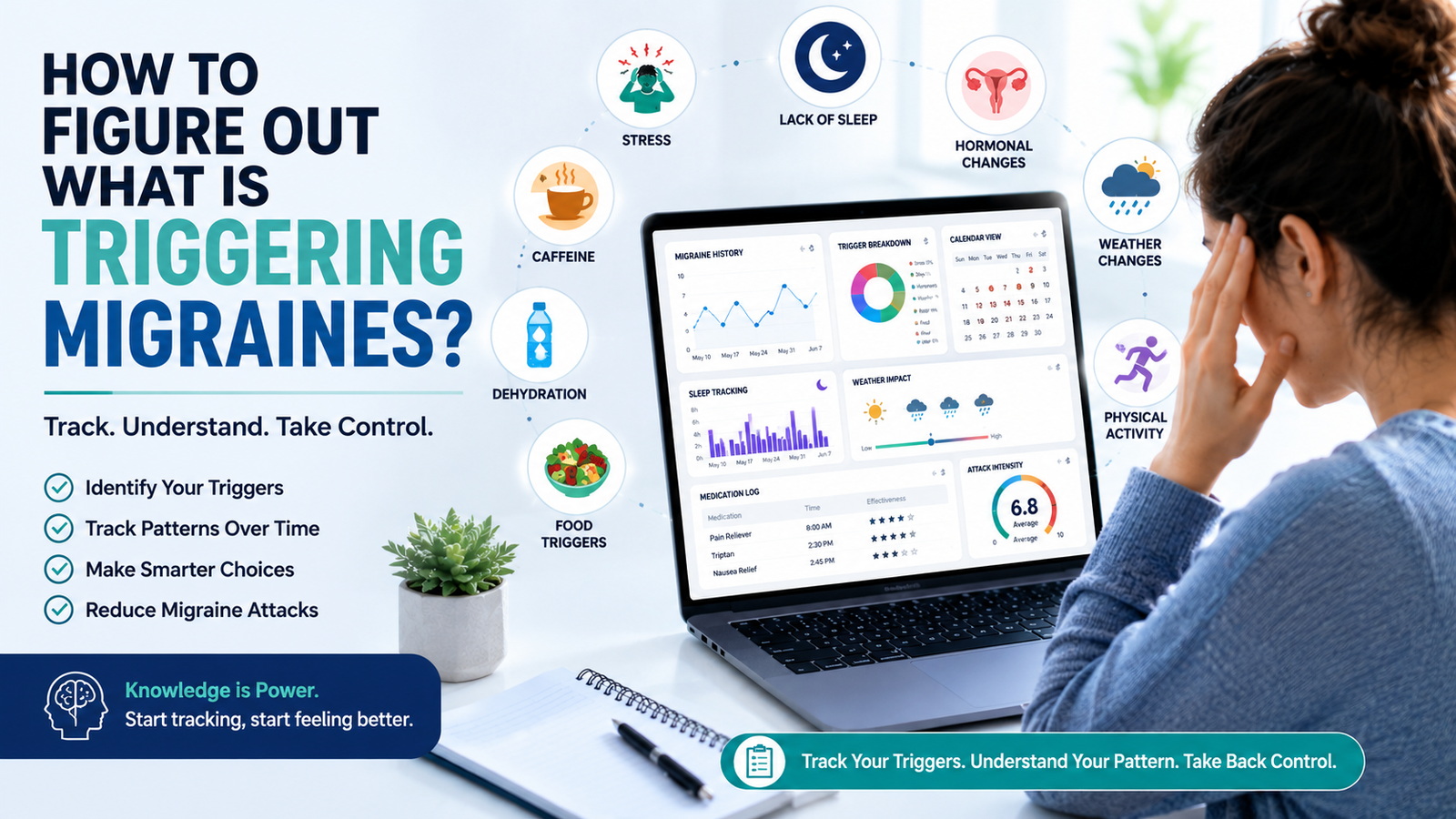
If you experience migraines regularly, you’ve probably asked yourself:
“Why do I keep getting migraines?”
The truth is that migraines don’t have the same trigger for everyone. One person’s migraine may start after a poor night’s sleep, while another person’s may be linked to stress, hormonal changes, or even weather conditions.
The good news is that many migraine triggers can be identified over time if you consistently track your symptoms and daily habits.
In this guide, you’ll learn how to figure out what is triggering migraines, the most common migraine triggers, and the best way to keep track of them.
What Are Migraine Triggers?
A migraine trigger is something that may increase the likelihood of a migraine attack in a person who is susceptible to migraines.
Triggers don’t necessarily cause migraines by themselves. Instead, they may contribute to an attack when combined with other factors.
For example:
- A stressful week alone may not trigger a migraine.
- A stressful week combined with poor sleep and skipped meals might.
This is why finding your personal pattern is often more helpful than focusing on a single trigger.
Why Is It So Hard to Identify Migraine Triggers?
Many people try to remember what happened before a migraine.
Questions like:
- What did I eat yesterday?
- Did I sleep enough?
- Was I stressed?
- Did the weather change?
- Did I skip lunch?
After several migraine attacks, these details become difficult to remember accurately.
That’s why healthcare professionals often recommend keeping a migraine diary or using a migraine tracking tool.
The Most Common Migraine Triggers
Although triggers vary from person to person, some are reported more frequently than others.
1. Stress
Stress is one of the most common migraine triggers.
Examples include:
- Work pressure
- Financial worries
- Family responsibilities
- Anxiety
- Emotional tension
Interestingly, migraines may occur after a stressful event rather than during it.
2. Lack of Sleep
Your brain benefits from a regular sleep schedule.
Possible sleep-related triggers include:
- Sleeping too little
- Sleeping too much
- Going to bed late
- Poor-quality sleep
- Shift work
3. Hormonal Changes
Many women notice migraines around:
- Menstruation
- Ovulation
- Pregnancy
- Menopause
Tracking your cycle may help reveal patterns over time.
4. Weather Changes
Some people report migraines after changes in:
- Temperature
- Humidity
- Storms
- Barometric pressure
Weather isn’t a trigger for everyone, but it’s worth monitoring if you notice a pattern.
5. Certain Foods and Drinks
Food triggers vary widely.
Common examples include:
- Alcohol
- Aged cheeses
- Processed meats
- Chocolate
- Artificial sweeteners
- Foods containing MSG
Rather than eliminating many foods at once, it’s usually better to track what you eat and look for consistent patterns.
6. Skipping Meals
Going too long without eating may contribute to migraines in some people.
Try to:
- Eat regular meals.
- Stay hydrated.
- Avoid long periods without food.
7. Dehydration
Even mild dehydration may contribute to headaches or migraines for some individuals.
Keeping a water bottle nearby can make it easier to stay hydrated throughout the day.
8. Bright Lights and Strong Smells
Some people are sensitive to:
- Bright sunlight
- Flashing lights
- Strong perfumes
- Smoke
- Loud environments
If these situations regularly occur before a migraine, they may be worth noting.
Steps to Identify Your Migraine Triggers
Finding your personal migraine triggers takes time and consistency, but following these simple steps can make the process much easier. The more information you record, the easier it becomes to recognize patterns that may be contributing to your migraine attacks.
Step 1: Track Every Migraine
Each time you have a migraine, record:
- Date
- Time
- Pain level
- Symptoms
- Duration
The more complete your records are, the easier it becomes to identify patterns.
Step 2: Record Your Daily Habits
Try to note:
- Sleep
- Stress
- Meals
- Water intake
- Exercise
- Weather
- Medications
- Menstrual cycle (if applicable)
These details can provide valuable clues over time.
Step 3: Look for Patterns
Instead of focusing on one migraine, review several weeks or months of records.
You may notice patterns such as:
- Migraines occurring after less than six hours of sleep.
- Attacks during periods of high stress.
- Symptoms appearing before storms.
- Headaches around the same phase of your menstrual cycle.
Patterns are often more meaningful than isolated events.
A Simpler Way to Track Everything
Keeping a handwritten diary can work, but it may become difficult to organize and review as your records grow.
If you’d like a more structured approach, MigraClarity is a browser-based migraine tracking platform designed to help you log attacks, monitor potential triggers, and organize your migraine history.
If you’d like to learn more about its features, pricing, pros, and whether it’s worth using, read article – MigraClarity Review: Is This the Best Migraine Tracker of 2026?
With MigraClarity, you can:
- Track migraine attacks in one place.
- Record sleep, stress, diet, medications, and other potential triggers.
- Optionally track hormonal cycle information.
- Monitor how well different medications work for you.
- Generate reports you can share with your healthcare provider.
If you’re looking for an easier way to stay consistent with tracking, it may be worth exploring.
Should You Avoid Every Possible Trigger?
Not necessarily.
Avoiding every suspected trigger can become stressful and may not always be practical.
Instead:
- Identify your personal triggers.
- Discuss them with your healthcare provider.
- Make gradual lifestyle adjustments where appropriate.
Tracking helps you focus on patterns that are relevant to you, rather than avoiding things unnecessarily.
When Should You See a Doctor?
You should seek medical advice if:
- Your migraines become more frequent.
- Your headaches suddenly change.
- Over-the-counter medications stop helping.
- Migraines interfere with work or daily life.
- You experience new neurological symptoms such as weakness, confusion, or sudden vision changes.
A healthcare professional can help determine the best management plan for your situation.
Tips for Better Migraine Management
While everyone’s experience is different, these habits may support overall migraine management:
- Maintain a regular sleep schedule.
- Stay hydrated.
- Eat meals consistently.
- Manage stress with relaxation techniques.
- Exercise regularly, if appropriate.
- Track your migraines consistently.
- Follow your healthcare provider’s recommendations.
Frequently Asked Questions
Can migraines have more than one trigger?
Yes. Many people find that a combination of factors—such as poor sleep, stress, and skipped meals—may increase the likelihood of an attack.
How long should I track migraines?
Tracking for several weeks or months can provide a clearer picture of recurring patterns. The longer and more consistently you track, the more useful the information may become.
Is there an app to track migraine triggers?
Yes. There are several migraine tracking tools available. MigraClarity is one option that allows users to log attacks, monitor potential triggers, track medication responses, and generate reports for healthcare appointments.
Can tracking migraines cure them?
No. Tracking does not cure migraines. However, it may help you recognize patterns and have more informed discussions with your healthcare provider.
Final Thoughts
Learning how to figure out what is triggering migraines takes time, consistency, and careful observation. While there is no universal trigger, keeping detailed records can help you identify patterns that are unique to you.
Whether your migraines seem related to stress, sleep, weather, diet, or hormonal changes, tracking these factors can make it easier to understand what’s happening over time.
If you want a more organized alternative to a paper diary, MigraClarity provides a browser-based way to record attacks, monitor potential triggers, evaluate medication responses, and create reports for your healthcare provider.
Ready to start understanding your migraine patterns?
👉 Visit the Official MigraClarity Website and explore its free tracking features today.
Affiliate Disclosure: This article contains affiliate links. If you purchase through these links, we may earn a commission at no additional cost to you.



Pingback: MigraClarity Review: Best Migraine Tracker App of 2026?